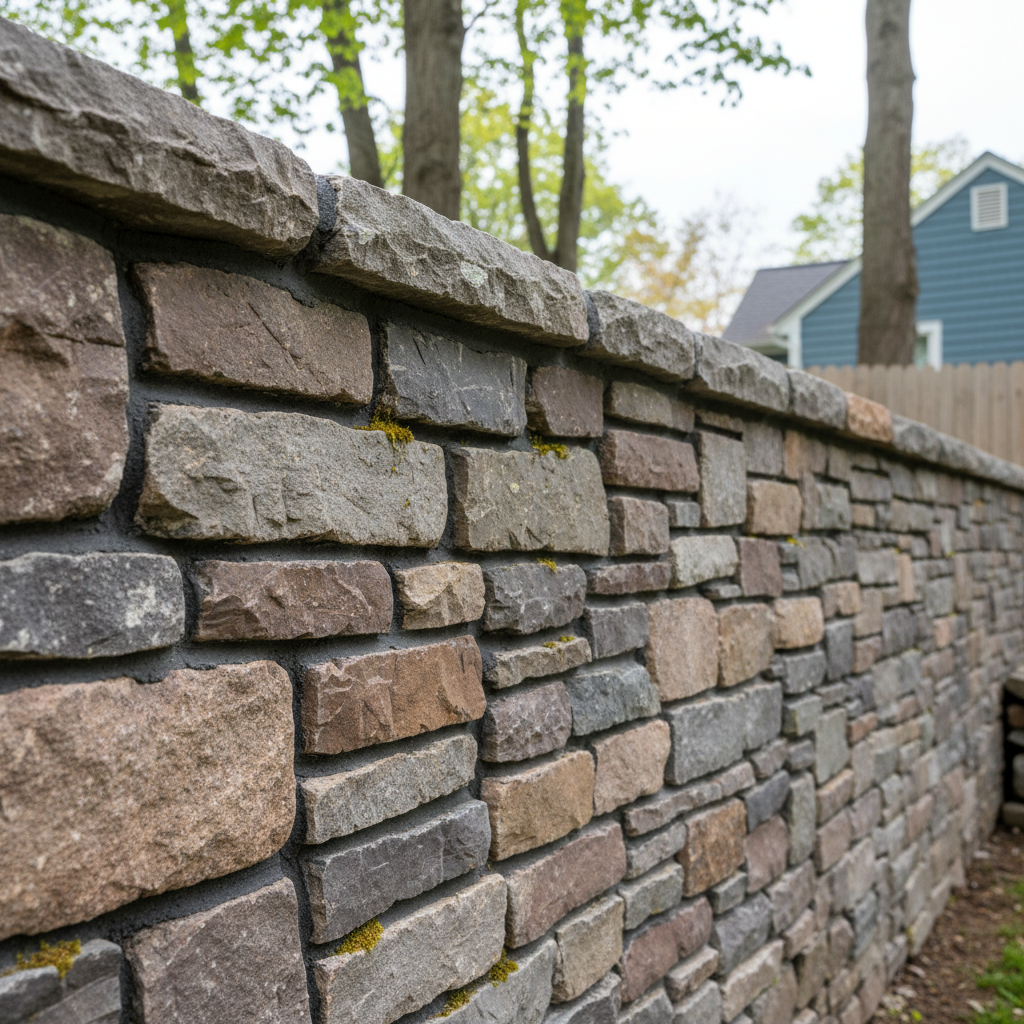
So, you're looking at your yard, maybe that old retaining wall is crumbling, or you're dreaming of a new stone patio. Stone masonry looks great, adds value, and honestly, it's just plain solid. But before you grab a trowel and a bag of mortar, let's talk about what's realistic for a homeowner to do themselves and when it's really time to call in a professional, especially here in Newton.
Before You Start: Planning and Prep
First things first: what exactly are you trying to build? A small garden border? A new walkway? A big retaining wall that's holding back a hillside? The scope of the project is probably the biggest factor in deciding if it's a DIY job or not. If it's just a few loose stones in a garden bed, you can probably handle that. If it's anything structural, or involves a lot of digging, water drainage, or heavy lifting, that's where you start thinking about calling someone like us at Ace Masonry Co.
You'll need to think about materials too. Natural stone, veneer, concrete blocks? Each has its own challenges. Natural stone looks amazing, but it's heavy, irregular, and takes a lot of skill to lay right. Manufactured stone veneer is lighter and more uniform, a bit more forgiving for a DIYer. Concrete blocks are the easiest to work with for a beginner, but they don't always give you that classic stone look.
Permits are another big one. For anything structural, like a new retaining wall over a certain height (often 3-4 feet), or a significant patio addition, you'll likely need a permit from the City of Newton's Inspectional Services Department. Don't skip this. It's not just about avoiding fines; it's about making sure your project is safe and up to code. Trust me, you don't want to build something only to have to tear it down later.
What You Can Probably DIY
Okay, so what can you realistically do yourself without getting into too much trouble?
- Small Garden Edging: If you're just laying a single course of small stones to define a flower bed, go for it. You're mostly just dry-stacking or using a very thin mortar bed.
- Simple Stepping Stones: Laying individual flagstones in a path? That's totally doable. Dig out a shallow bed, add some sand or gravel for leveling, and set your stones. Make sure they're stable and don't wobble.
- Minor Repointing: If you have a few small cracks in your mortar joints on a wall or chimney that aren't structural, you can carefully chip out the old mortar and replace it. Watch some videos, get the right tools (a hammer, chisel, pointing trowel), and take your time. But if the cracks are widespread or the wall is leaning, that's a red flag.
For these kinds of projects, you'll need basic tools: a shovel, a level, a rubber mallet, a trowel, a wheelbarrow, and some safety gear like gloves and eye protection. It's hard work, but it's satisfying to see the results.
When to Call Ace Masonry Co. (or another Pro)
Here's where you really need to consider bringing in the pros. These aren't just about aesthetics; they're about safety, longevity, and often, significant investment.
- Retaining Walls: This is probably the most common mistake I see homeowners make. Newton's got some hilly spots, and retaining walls are critical for managing soil and water. If it's more than a couple of feet high, or if it's holding back a lot of soil or a slope, it needs proper engineering, drainage, and a solid foundation. A failed retaining wall isn't just ugly; it's dangerous and expensive to fix.
- Large Patios and Walkways: While you can do stepping stones, a full patio or a long, mortared walkway requires careful base preparation, proper pitch for drainage (especially with our New England winters and freeze-thaw cycles), and consistent mortar work. If the base isn't right, you'll get cracking, settling, and pooling water.
- Chimney Repair or Rebuilding: Chimneys are complex. They deal with heat, smoke, and weather. Any work on a chimney, beyond very minor tuckpointing, should be left to a professional. Improper repairs can lead to fire hazards or structural failure.
- Structural Foundation Work: Any cracks or issues with your home's foundation? Don't even think about DIY. This is serious stuff and requires expert assessment and repair.
- Anything Involving Heavy Lifting or Specialized Equipment: If you're talking about moving boulders or using heavy machinery, that's our territory. We've got the equipment and the know-how to do it safely and efficiently.
A good mason understands soil conditions, drainage, material properties, and structural integrity. We've got the experience to anticipate problems and build things that last. We also have the right insurance, which is a big deal if something goes wrong.
Ultimately, it comes down to risk, skill, and time. If you're unsure, or if the project feels overwhelming, it's always better to get a few quotes from local, reputable masons. We're happy to talk through your project and give you an honest assessment. Sometimes, saving a few bucks upfront can cost you a whole lot more down the road.