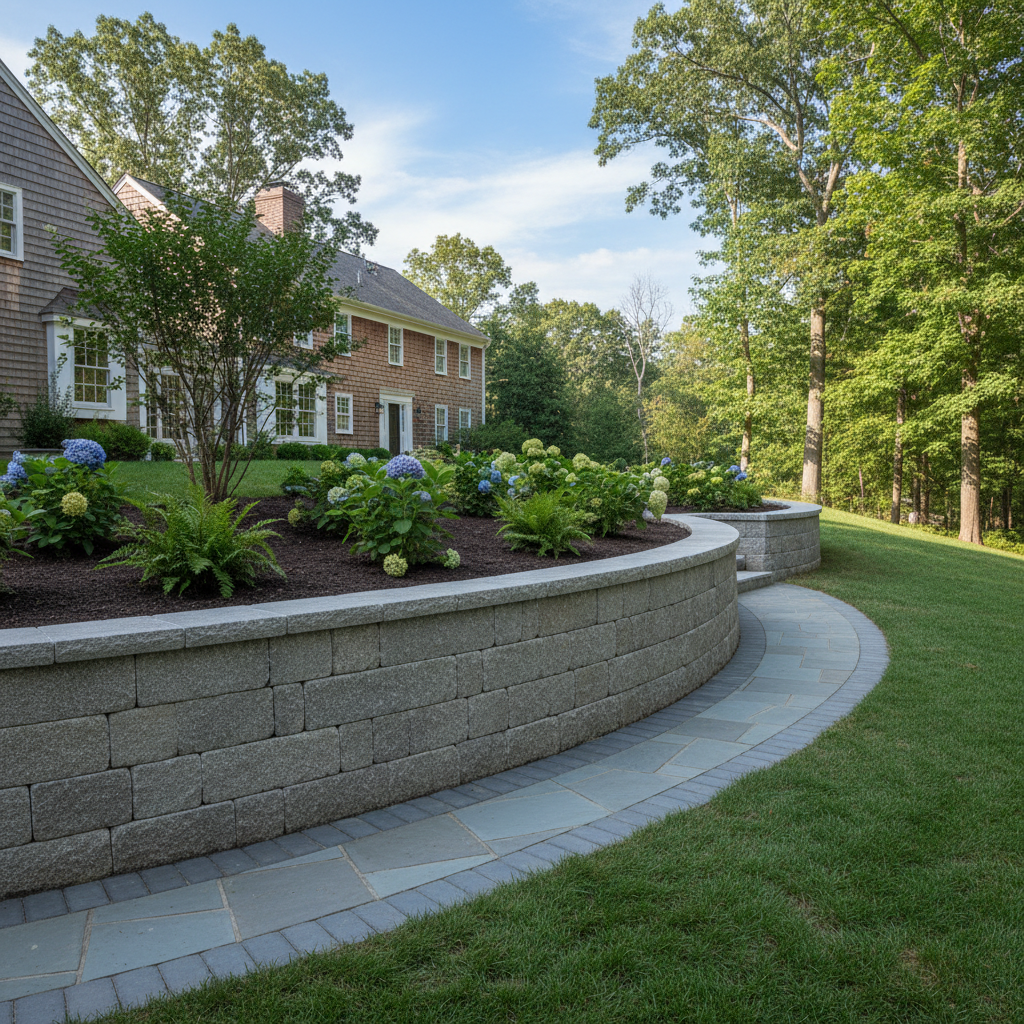
You're eyeing your yard, maybe it's got a bit of a slope, or you just want some nice, flat, usable space. A retaining wall often seems like the perfect answer. And it absolutely can be! But, after 25 years in this business, I've seen plenty of folks here in Newton – especially with those older, sloped properties in places like Newton Centre or Auburndale – make some pretty common, and frankly, expensive mistakes when they're planning or hiring for these projects. Let's talk about what to keep an eye out for.
Mistake #1: Thinking It's Just a Stack of Blocks
This is probably the biggest one out there. A retaining wall isn't just some pretty garden border. It’s a serious structural piece, designed to hold back thousands of pounds of soil and water. It really needs to be engineered correctly. I’ve had calls from homeowners whose "new" walls are leaning after a heavy spring thaw or a summer downpour, and it's almost always because someone treated it like a simple DIY job that just needed some blocks and mortar. You can't just stack things up and cross your fingers, especially with our crazy freeze-thaw cycles here in Massachusetts, can you?
A good retaining wall needs a solid, deep foundation, proper drainage behind it, and the right materials for the job. If a contractor starts talking about just laying blocks on a shallow layer of gravel, that’s a huge red flag. They're cutting corners, and you'll definitely pay for it later, usually with a failing wall and a much bigger repair bill.
Mistake #2: Ignoring Drainage (Or Not Asking About It)
Water is the absolute enemy of any retaining wall. When water builds up behind a wall, it creates immense hydrostatic pressure – enough to push even really well-built walls right over. I truly can't stress this enough: drainage is critical. A proper retaining wall design always includes a drainage system, usually a perforated pipe (like a French drain) tucked behind the wall, surrounded by gravel, and then a filter fabric to keep soil from clogging it up.
When you're chatting with contractors, ask them specifically about their drainage plan. If they gloss over it or don't seem to have a clear answer, that's a problem. Some people think a few weep holes are enough. They're not, not for the kind of soil we have around here, which can get pretty saturated. You need a comprehensive system to really manage that water effectively.
Mistake #3: Picking a Contractor Based Solely on Price
Look, everyone wants a good deal. I totally get it. But when it comes to something as important as a retaining wall, the cheapest bid is rarely the best. I’ve seen too many homeowners go with the lowest price only to end up with a wall that fails within a few years, costing them double or triple to fix it properly. A cheap price often means a contractor is cutting corners somewhere – maybe on materials, maybe on labor, or maybe on those critical steps like the foundation and drainage.
When you're getting quotes, ask for detailed breakdowns. What materials are they using? What's their process for excavation, foundation, and drainage? Are they licensed and insured? Do they have references for similar projects? Don't be shy about asking tough questions. A reputable contractor, like Ace Masonry Co., will be happy to explain their process and justify their pricing.
Mistake #4: Not Considering Local Regulations and Permits
Did you know that here in Newton, depending on the height and location of your retaining wall, you might actually need a building permit? Many homeowners overlook this, thinking it's just a landscaping project. But if your wall is over a certain height (often 4 feet, but always check with the city's building department), or if it's near a property line or public way, you'll likely need a permit and possibly even an engineered design. Ignoring this can lead to fines, stop-work orders, or even having to tear down a newly built wall. What a headache!
A good contractor should know the local zoning laws and permit requirements. They should guide you through this process or at least inform you of what's needed. If a contractor tells you