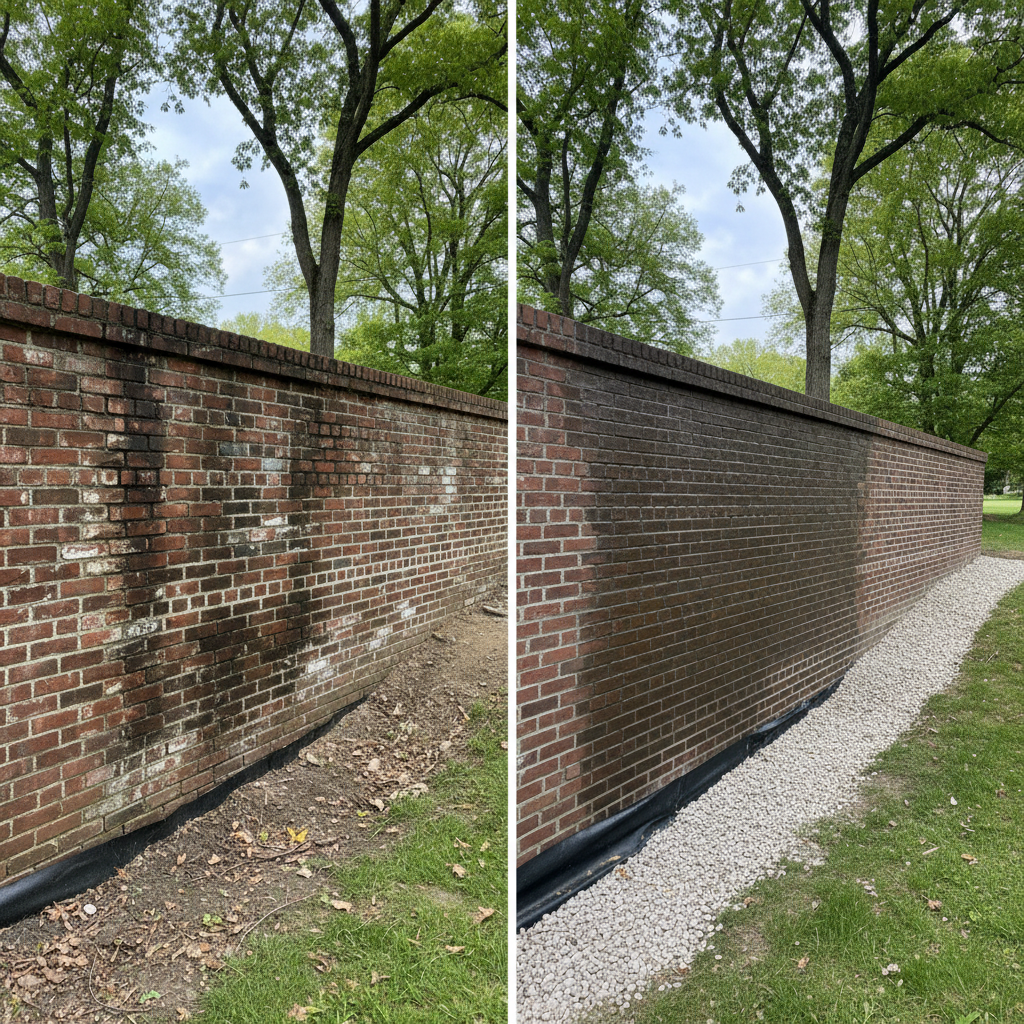
Is your Newton home showing signs of water intrusion through its masonry? Maybe you're seeing efflorescence on your brick, or worse, damp spots in your basement. When it comes to keeping water out, homeowners often hear about two main approaches: applying a surface sealer or going for a full exterior foundation waterproofing system. As a local pro with Ace Masonry Co., I've seen both done, and I can tell you, they're not interchangeable. Let's talk about what each one really means for your property.
Surface Sealers & Water Repellents
This is often the first thing people think of, and it's generally the more affordable, less invasive option. A surface sealer, or water repellent, is a clear liquid applied directly to the exterior of your brick, stone, or concrete. It doesn't form a film on the surface like paint; instead, it penetrates into the pores of the masonry. The idea is to make the material hydrophobic – meaning it repels water, causing it to bead up and run off rather than soak in.
Pros:
- Cost: Significantly cheaper upfront than a full exterior system.
- Appearance: Most are clear and don't change the look of your masonry at all. Some can even enhance the color slightly.
- DIY Potential: For small, accessible areas, some homeowners can apply these themselves, though a professional application is always best for consistent coverage and warranty.
- Breathability: Good quality sealers allow the masonry to 'breathe,' meaning moisture vapor can still escape from inside the wall, which is important for preventing internal moisture issues.
Cons:
- Durability: This is where they fall short. Depending on the product and exposure to our harsh New England weather cycles – those freezing and thawing winters we get in Newton Highlands can really take a toll – they typically last anywhere from 5 to 15 years. You'll need to reapply.
- Effectiveness: They're great for preventing surface absorption and minor leaks, but they won't stop water coming through cracks, mortar joint failures, or significant hydrostatic pressure issues from saturated soil.
- Preparation: The masonry needs to be perfectly clean and in good repair before application. Any existing efflorescence, dirt, or loose mortar will compromise its effectiveness.
Exterior Foundation Waterproofing (Membrane & Drainage)
Now, this is the heavy hitter. If you've got a serious water problem in your basement, especially if it's coming through your foundation walls, a surface sealer isn't going to cut it. An exterior foundation waterproofing system involves excavating around your entire foundation, applying a flexible, impermeable membrane (often a thick rubberized asphalt or synthetic sheet) to the exterior of the foundation wall, and installing a new perimeter drain tile (French drain) system at the footing level. The drain tile collects water and directs it away from your foundation.
Pros:
- Effectiveness: This is the gold standard for stopping basement leaks and preventing water from ever reaching your foundation walls. It addresses hydrostatic pressure and creates a complete barrier.
- Durability: Once installed correctly, these systems are designed to last for decades, often for the lifetime of the home.
- Comprehensive Solution: It tackles the root cause of water intrusion from the outside, preventing structural damage and mold growth.
Cons:
- Cost: It's a significant investment. Excavating, applying the membrane, installing drainage, and backfilling is a major undertaking.
- Invasiveness: Your landscaping, patios, or decks around the foundation will be disturbed. This is a big project.
- Time: It takes longer to complete than a simple sealer application.
- Disruption: You'll have heavy equipment and workers on your property for an extended period.
So, Which One's Right for Your Newton Home?
Here's my straightforward advice. If you're seeing minor dampness, efflorescence on your brick veneer above grade, or want to protect new masonry from future water penetration, a high-quality breathable water repellent is a smart, cost-effective choice. It's preventative maintenance, like painting your house.
However, if you've got water actively leaking into your basement, especially through foundation cracks or at the cove joint (where the wall meets the floor), you need more than a band-aid. You need an exterior foundation waterproofing system. There's no getting around the cost or the disruption, but it's the only reliable way to solve serious basement water issues. Trying to seal the inside or just applying a surface repellent to the outside of a leaking foundation is like trying to stop a waterfall with a sponge – it just won't work.
Ultimately, the best approach depends on the specific problem you're trying to solve. Don't guess. Get a professional assessment. We've seen it all, from the older homes in Newton Centre with their fieldstone foundations to newer constructions, and we can help you figure out exactly what your masonry needs to stay dry and sound for years to come.