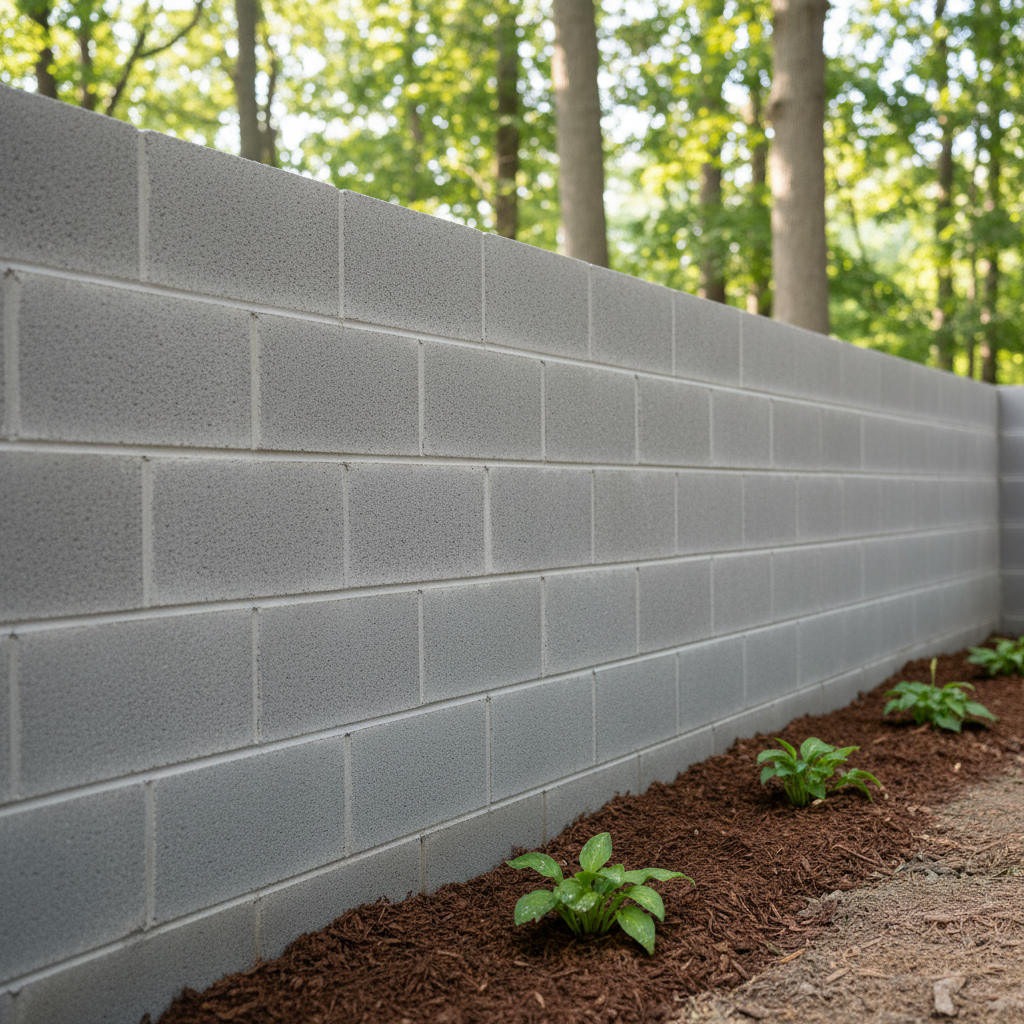
What's the real difference between concrete blocks and cinder blocks? Aren't they the same thing?
That's a question I get a lot, and it's a good one because folks often use the terms interchangeably. But no, they're not quite the same. When most people say 'cinder block' today, they're usually thinking of a standard concrete masonry unit, or CMU. A true cinder block, back in the day, was made with coal cinders as an aggregate. They were lighter, but also weaker and more porous. You don't really see them anymore for structural work.
What we use for pretty much everything now – foundations, retaining walls, garages – are concrete blocks. These are made with cement, sand, gravel, and water. They're much stronger, denser, and more durable, designed to meet specific structural standards. So, while the name 'cinder block' might stick around, what you're getting from Ace Masonry Co. is always a robust concrete block, built to last against our New England weather.
Do I need a building permit for a block wall on my property in Newton?
Yep, chances are you will. This isn't just a suggestion; it's a requirement for most structural work in Newton, and pretty much every town around here. The exact rules can vary depending on the wall's height, its purpose (retaining earth vs. just a garden wall), and its proximity to property lines. Generally, if it's over a certain height, like four feet, or if it's supporting a significant load or retaining soil, you'll definitely need a permit.
Even for smaller, non-load-bearing walls, it's always best to check with the Newton Inspectional Services Department. They're there to make sure everything's built safely and to code. We can help you figure out what's needed for your specific project and even assist with the permit application process. Skipping this step can lead to big headaches down the road, including fines or having to tear down what you've built.
How long does a block wall typically last in our climate?
A well-built concrete block wall, properly installed with good drainage and a solid foundation, should last a very, very long time. We're talking decades, easily 50 to 100 years or more. Think about some of the older homes and commercial buildings around Newton Centre; many have block foundations that are still doing their job perfectly after a century.
The key is that 'well-built' part. Our freeze-thaw cycles here in Massachusetts are brutal. Water getting into cracks, freezing, and expanding is the enemy. That's why proper mortar joints, good waterproofing on retaining walls, and adequate drainage are non-negotiable. If you cut corners, you'll see issues much sooner. But done right, a block wall is an incredibly durable investment.
Can I build a block wall directly on the ground, or does it need a footing?
Absolutely not directly on the ground. Every block wall, no matter how small, needs a proper footing. This isn't optional; it's fundamental to the wall's stability and longevity. The footing distributes the weight of the wall and any load it's supporting over a wider area, preventing settling and cracking.
For us in Newton, where we deal with clay soils and those harsh freeze-thaw cycles, footings are especially critical. They need to be dug down below the frost line – typically 4 feet deep around here – to prevent frost heave from pushing the wall up and down, which will inevitably lead to structural failure. We pour a concrete footing, reinforced with rebar, that's wider than the wall itself. It's the foundation for your foundation, really.
What kind of maintenance does a block wall require?
One of the best things about concrete block walls is how low-maintenance they are. Once it's built right, you won't be spending your weekends fussing over it. The main things you'll want to keep an eye on are:
- Drainage: Especially for retaining walls, make sure the weep holes or drainage systems aren't clogged. Water buildup behind a wall is a recipe for disaster.
- Cracks: Small hairline cracks can happen, but if you see anything significant, especially horizontal cracks or stair-step cracks in the mortar, get it looked at. It could indicate a structural issue.
- Mortar Joints: Over many decades, mortar can start to degrade. If you notice crumbling or missing mortar, that's when you'd consider tuckpointing to restore the integrity and keep water out.
- Efflorescence: This is that white, powdery substance you sometimes see. It's just mineral salts leaching out as water evaporates. It's usually harmless and can be cleaned off, but if it's constant, it might point to a persistent moisture issue.
Compared to other building materials, it's pretty hands-off. Just a quick visual check now and then is usually all it takes.
Can I finish a block wall to make it look nicer than plain gray blocks?
You bet you can! Plain gray blocks are great for utility, but they're not always the aesthetic you want for a visible part of your home or landscape. There are tons of ways to finish them off to fit any style. Here are a few common options:
- Stucco or Render: This is a popular choice. We apply a cement-based coating that can be textured and colored. It gives a smooth, uniform look and offers additional weather protection.
- Veneer Stone or Brick: You can apply a thin layer of natural stone, manufactured stone, or brick veneer directly to the block wall. This gives you the classic look of stone or brick without the cost or structural requirements of a full-thickness wall. It's a fantastic way to blend with existing architecture, especially in neighborhoods like Waban or Chestnut Hill where you see a lot of traditional masonry.
- Paint: A good quality masonry paint can completely change the look. You'll want to make sure the wall is clean, dry, and primed properly for the best adhesion and longevity.
- Siding: For exterior walls of a building, you can frame out and attach siding materials like vinyl, wood, or fiber cement over the block.
The possibilities are pretty open. We can talk through what look you're going for and what makes the most sense for your specific wall and budget.